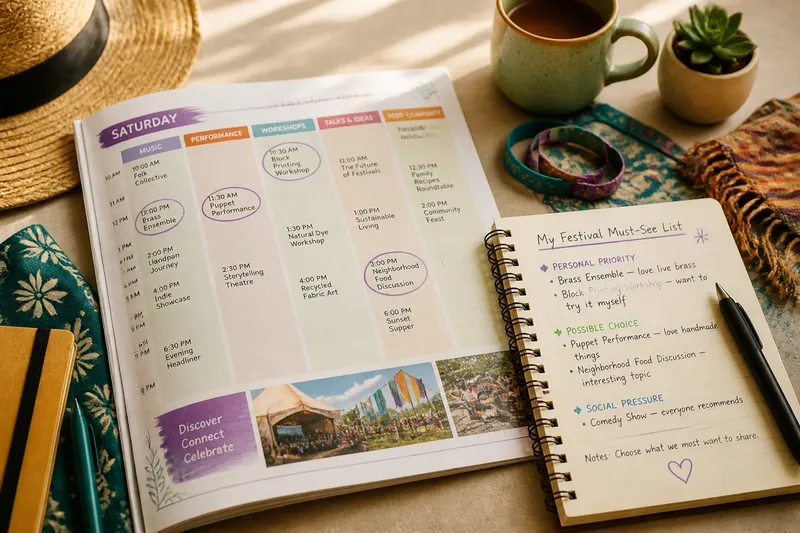
From Handbill to Keepsake: The Changing Role of the Festival Program
Learn how to turn a festival program into a personal keepsake, with simple ways to add context, choose what to save, and protect meaningful details.
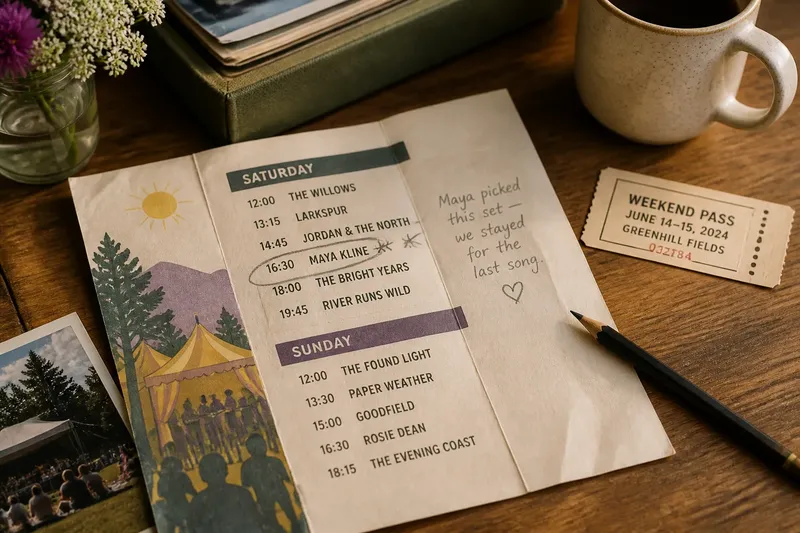
A creased festival program lands beside the ticket stub on the kitchen table. The performers’ names are easy to recognize, but a pencil mark beside one set brings back the friend who suggested it. A festival program can become a keepsake when you preserve those personal connections, not just the printed schedule.
The useful question is not whether every handbill deserves a place in a drawer. It is what this particular piece can help you remember, and how to keep that meaning legible without turning a casual souvenir into a preservation project.
What makes a festival program a keepsake?
A program records what organizers planned; a keepsake connects that record to your experience. A marked event, a name written in the margin, or a note about who came along can make an ordinary sheet specific to one day.
Choose a detail that would be hard to recover later. It might be the name of a performer you discovered, the venue where your group regrouped, or the reason you circled an event. A concise note is often more useful than a broad description such as “great festival.”
Keep the detail that makes this program yours.
What should you add before the memory gets vague?
Write on a clean margin or on a separate slip of archival-quality paper if the program is delicate. Use a pencil for a simple note, and avoid writing over text or artwork you want to preserve. Add only what you can identify clearly rather than guessing at a name or date.
Say you return home with a program that has a circle beside a small outdoor concert. You remember that your cousin chose it after the group changed plans, but not the performer’s name. You check the printed listing, write “Maya picked this set; we stayed for the last song” in the margin, and leave the program with a note that ties the mark to a person and moment.
If you are unsure whether ink or pencil is suitable for a fragile or unusual item, leave the original unmarked and attach a separate note instead.
How do you decide which programs to keep?
Use a decision rule that separates personal meaning from simple accumulation. The point is not to keep the most attractive paper, but to retain items whose details would otherwise be lost or whose design matters to you.
- If the program has a personal mark or note you can explain, keep it with a brief caption; if the mark has no meaning you can recall, consider photographing the page or letting it go.
- If it records a performer, venue, or event you want to remember, check that the name is readable; if it is, file the program, but if it is not, add a separate identifying note before filing.
- If a friend wrote or drew something on it, ask whether that person or moment matters to you; if it does, keep the marked page, but if not, retain only a photograph if you want a record.
- If the program is a duplicate with no distinct notes or artwork, compare it with the copy you already have; if both convey the same memory, keep the clearer copy and recycle the duplicate where local rules allow.
- If the paper is damp or dirty, let it dry in a clean, shaded place before storing it; if it remains damp or has a persistent stain, keep it apart from other paper and seek conservator advice for a valued item.
- If the program’s artwork or design is what you value, check whether the image and title are clear; if they are, keep the original flat, but if damage makes handling risky, photograph it and ask a paper conservator about care.
A small, chosen collection is easier to revisit than a pile saved without a reason.
How can you store a paper keepsake gently?
Let a program dry fully before putting it away. Store it flat in a clean folder or suitable paper sleeve, away from damp areas and direct sunlight. Keep it separate from loose flyers, metal clips, and objects that could press into or scratch the page.
Skip household tape on tears and folds. Adhesive can change the paper surface and complicate later handling. For a fragile, unusual, or especially valued program, ask a qualified paper conservator before attempting repairs.
Write the festival name and year on the folder rather than on the program itself. That gives the item context without adding marks to the original.
What if you want the memory but not the paper?
You can preserve a program’s useful details without keeping the whole sheet. Photograph a marked page in good light, include enough of the surrounding text to identify the event, and add a short caption that explains why the page matters. Keep the image with other festival photos or in a folder named for the event.
A photo is less satisfying if the paper’s texture, handwriting, or original design is part of the memory. If those qualities matter, keep the original and use a photograph as a reference rather than a replacement.
Which keepsake questions come up most often?
Should I write on an original festival program?
For an ordinary, sturdy program, a short pencil note in an empty margin can add useful context. If the paper is fragile or personally significant, leave it untouched and keep your note separately.
Is a photo enough to preserve a festival memory?
A clear photo can preserve names, marks, and artwork when you do not want to store the paper. It cannot retain the original paper’s feel or the physical marks themselves, so keep the original if those qualities matter to you.
How can I remember why I saved a program?
Add a brief caption on the folder or a separate note, naming the people, event, or moment that gives the program meaning. A specific detail is more helpful later than a general label such as “festival memories.”
What should I do with a fragile or valuable program?
Handle it gently, avoid tape or cleaning products, and store it flat in a clean, dry place away from direct light. Ask a qualified paper conservator for advice before trying repairs or treatments.
How can a festival program keep its personal meaning?
A festival program becomes a keepsake through the context you give it: a name, a mark, or a brief account of who was there. The paper does not need to document the entire day; it only needs to hold onto a detail you want to revisit.
When you sort the programs you already have, use “festival program keepsake” as a simple test: can you name the memory or information this item preserves? If you can, add a small caption and store it gently; if you cannot, a clear photo—or letting the paper go—may suit the memory better.