Why a Small Gap Between Events Changes the Day
A small gap between festival events gives you room to reset, make a fresh choice, and notice an unexpected performance without losing the day’s rhythm.
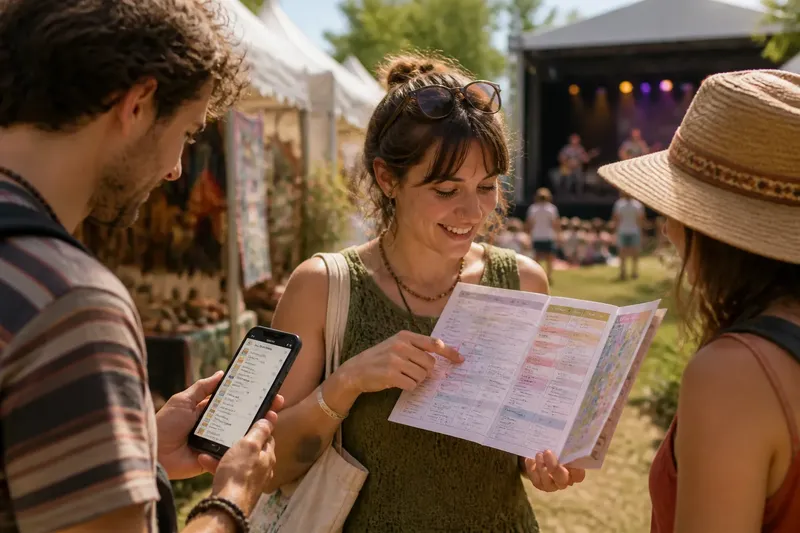
At a festival, one performance ends just as another is about to begin. Your friend is checking the schedule, your shoulders are tight from standing, and a small band has started playing near the food stalls. A small gap between festival events can turn that rushed handoff into a chance to reset, choose again, and notice what is happening nearby.
The pause does not need to become another scheduled activity. Its value comes from leaving a little space between plans, so the next decision can respond to how the day is actually going. The following walk-through is invented, but the choices are familiar to anyone planning a day with friends, stages, and a crowded site.
What happens when every transition is booked?
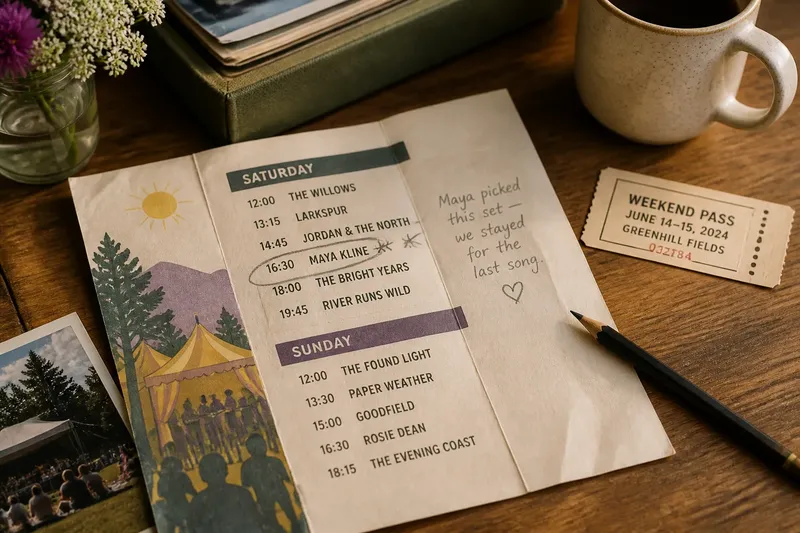
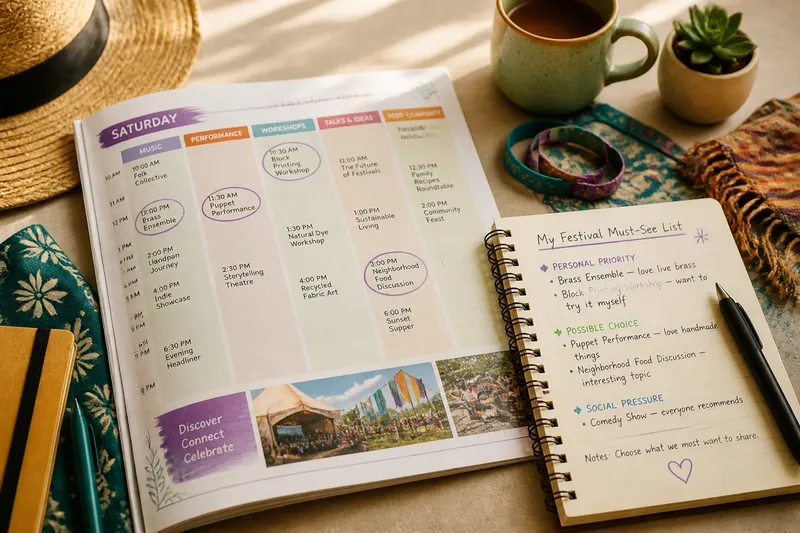
Imagine that Maya and Luis are attending a neighborhood arts festival together. They have circled a craft demonstration, a dance performance, and a closing concert on the printed schedule. Their plan looks tidy: when one event ends, they head straight to the next.
The demonstration runs a little long, and the pair leave its tent with only enough time to cross the site. They pass a shaded courtyard where a few musicians are setting up, but stopping would put the dance performance at risk. They hurry on, arrive flustered, and spend the opening moments looking for a place to stand.
Nothing has gone disastrously wrong. Still, the day is being directed by the schedule rather than by the people experiencing it. A tightly packed plan leaves little room to drink water, compare impressions, find a restroom, or decide that one event has changed what they want from the next.
The issue is not that the schedule contains too much. It is that each transition assumes the previous event will end precisely on time and that everyone will be ready to move at once. At a festival, those assumptions are easy to disrupt.
How do Maya and Luis make room to reset?
Before the next event, Maya suggests leaving an open interval after the dance performance. They keep the concert as a possible destination, but stop treating the route to it as a race. Instead, they agree on a simple meeting place near the courtyard and leave the next choice until they have caught their breath.
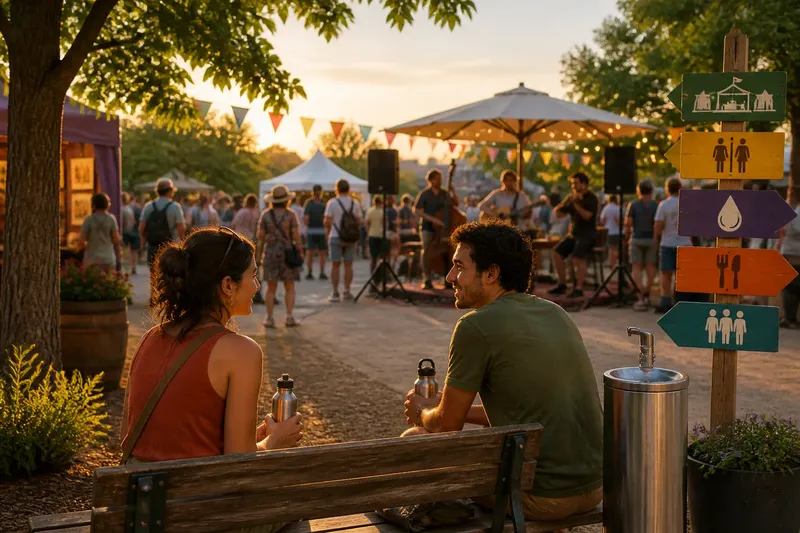
When the dance ends, they find a bench beside a water station. They drink, sit for a moment, and talk about the performance: Luis wants more music, while Maya is curious about the small stage they heard while crossing the grounds. The conversation is brief, but it replaces an automatic march with a fresh choice.
They walk toward the courtyard and find the musicians beginning an informal set. Since they have time, they listen from the edge rather than squeezing into a crowded area. After a song, Maya checks the schedule. The concert is still feasible, so they decide to go; if the set had held their attention, they could have stayed longer and let the rest of the plan change.
The gap has not added a new obligation. It has provided a place to pause, notice what is nearby, and choose what comes next with the day’s actual conditions in mind.
What can a pause make easier?
A deliberate interval can serve several purposes at once, though it helps to keep the intention modest. Think of it as a flexible transition rather than a hidden slot that must be filled.
- Physical reset: Find a seat, refill a water bottle, loosen a jacket, or rest tired feet. A pause makes it easier to notice what your body needs before you commit to standing through another set.
- Conversation: Ask one another what felt memorable and what sounds appealing now. This is especially useful when companions have different tastes or energy levels.
- Practical adjustments: Check the route, locate a restroom, or confirm where the group will meet if someone gets separated. Keep this to what you need for the next decision rather than turning the break into a planning meeting.
- Unplanned discoveries: Give your attention a chance to land on a nearby busker, an art display, or a lively corner of the festival. You may choose to stop, or simply enjoy noticing it as you pass.
These are options, not a sequence. On one occasion the useful thing may be sitting quietly; on another, it may be following a sound for a few minutes.
How much open time is useful between festival events?
There is no ideal interval for every site or group. A compact festival with nearby stages asks for different planning from a spread-out event with long paths, lines, or uneven ground. The useful question is whether the transition gives you enough room to arrive in a state where you can still enjoy the next event.
Maya and Luis do not try to calculate the perfect gap. They look at the map and notice that their planned events are in different parts of the grounds. They leave an unassigned stretch after the dance performance, then let the walk, the crowd, and their energy determine how much of it they use.
That approach also makes room for event schedules that shift. If a performance starts late or a path is crowded, the open interval can absorb some uncertainty. If everything runs smoothly, the pair can take a longer rest or explore a nearby stall instead of treating unused time as a problem.
For your own plan, consider the distance between venues, how quickly you like to move, and whether anyone in your group needs a quieter place to regroup. Use the event’s map and posted guidance to make practical decisions; venue access and event arrangements can vary.
What should you do if the group wants different things?
A pause can make disagreement easier to handle because it separates the decision from the pressure of moving immediately. One person may want to reach the next stage, while another may be ready for a seat or a change of pace. You do not have to treat those preferences as a dispute about the whole day.
Imagine Maya wants to listen to the courtyard musicians while Luis is eager for the concert. They agree to hear one song together, then check how much time remains and choose whether to split up or move on as a pair. If they separate, they pick a clear reunion point and time before going different ways.
This works best when the arrangement is simple and mutually understood. A pause can help people say what they want without forcing the group to negotiate every preference while walking through a crowd.
What if an event runs late or the pause disappears?
Sometimes a schedule change uses the space you hoped to leave open. Maya and Luis reach the concert later than expected because the dance performance ends late. Rather than rushing across the grounds, they check whether the concert has started and decide whether joining partway through still feels worthwhile.
If they cannot make it comfortably, they choose another nearby option or take a proper break. The point is not to protect every planned event at all costs; it is to make the next decision without letting a missed start turn into a hurried chain of choices.
A flexible plan can also mark one event as the day’s anchor: something the group especially wants to attend. Other events can remain possibilities around it. That distinction gives you a reason to adapt without making the schedule feel meaningless.
Why does the gap change what you notice?
By the end of the invented day, Maya and Luis attend the concert and still remember the courtyard set. The musicians were not listed among their original priorities; they became part of the day because the pair had room to hear them and decide whether to stop.
The result is not a busier itinerary. It is a day that includes a small shared discovery, an unhurried conversation, and a choice made after the previous performance rather than before it. The interval also gives each event a little space to settle, instead of making one experience blur into the next.
When you plan a festival day, leave at least one transition open enough to respond to the moment. A small gap between festival events is useful precisely because it does not prescribe what must happen inside it: it gives you room to recover, look around, and decide what deserves your attention next.