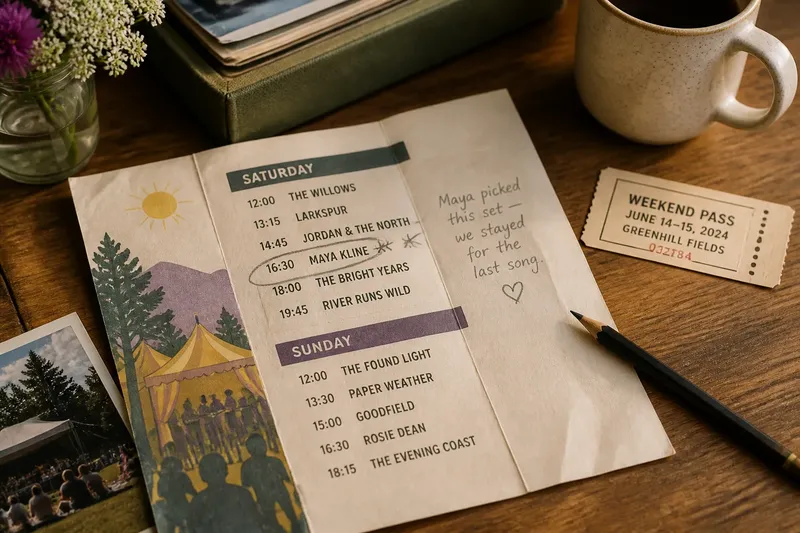
How to Build a Festival Must-See List Around What Matters to You
Build a festival must-see list around your own interests, compare competing events, and choose priorities you can enjoy without turning the program into a test.
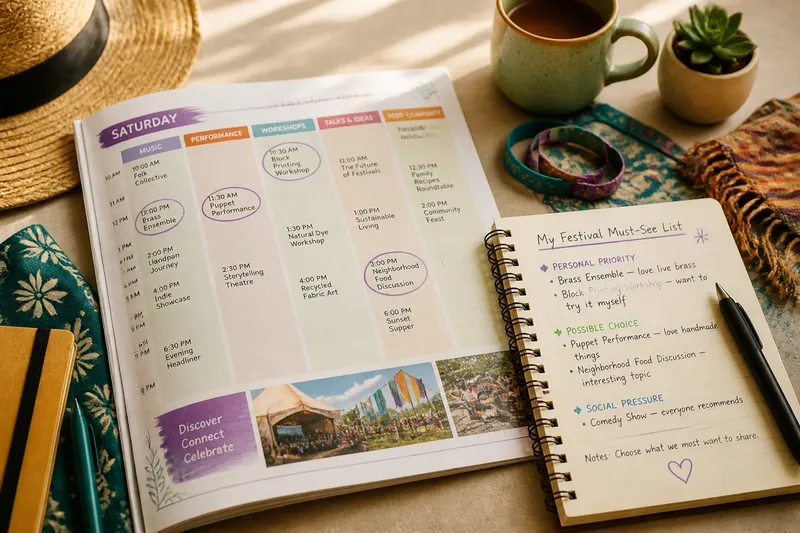
You have the festival program open, a pen in hand, and several events circled for the same afternoon. A festival must-see list works best when each mark has a clear reason behind it—not simply because an event is popular or sounds impressive.
What should a festival must-see list help you decide?
A useful list is a way to make choices, not a record of everything that caught your eye. It helps you distinguish between events that connect to your interests and events that seem important mainly because other people recommend them.
That distinction matters when two appealing events overlap or when a companion has different priorities. A personal reason—such as wanting to hear a particular instrument or see how an artist uses recycled fabric—gives you a basis for choosing between them.
How do you sort events by personal interest?
Read each description for a specific detail: a subject, art form, performer, material, setting, or way of taking part. Then write down what draws you to it. “I want to hear the brass ensemble” is more useful than “people say this is the one to see.”
Use three categories to keep the decision visible:
- Personal priority: You can name a specific reason you want to attend. If you can name one, keep it; if not, mark it as an option instead.
- Possible choice: A detail interests you, but you are not sure it matters enough to prioritize. If the description gives you a concrete point of curiosity, keep it available; otherwise, remove it from your working list.
- Social pressure: You added it because it is popular or others expect you to go. If you can identify no personal reason, cross it off; if a real interest emerges, move it to possible choice.
This is not a ranking of the events’ quality. It is a way to keep your own reasons separate from other people’s enthusiasm.
How can you choose between competing events?
Compare the details that matter to you, rather than relying on reputation or a vague sense that one event is more important. Ask which experience connects most directly to your interests, which format you are actually in the mood for, and whether you would choose it if nobody else had mentioned it.
Imagine you have marked a puppet performance and a neighborhood food discussion at the same time. Your invented starting point is a strong interest in handmade objects, plus a companion who is curious about family recipes; you each identify the reason you care, then choose the event you most want to share. The result is one shared priority, while the other stays an option rather than becoming a source of guilt.
How should companions build a shared list?
Ask each person to name a personal priority before deciding what to attend together. A shared list can include an event everyone wants, alongside individual choices that do not need group approval.
When someone suggests an event, ask what detail they think you would enjoy. “The costumes use elaborate beadwork” gives you something specific to consider; “everyone is going” does not explain why it suits you.
What do people ask about a festival must-see list?
How many events belong on my list?
Include the events for which you can name a personal reason, rather than aiming for a particular count. If two priorities compete, choose between them by the interest or experience you most want that day.
Should I mark a popular event if I am unsure?
Keep it as an option while you look for a detail that genuinely appeals to you. If no such detail stands out, leave it off the priority list.
What if I regret skipping an event?
You may wonder about an event you did not attend, especially when the program offers appealing alternatives. Remembering the reason you chose another event can help you see the decision as a preference, not a failure to complete the program.
Can I remove an event from the list?
Yes. If a description no longer interests you or your reason for marking it has changed, cross it off or move it to the possible-choice category. The list records what matters to you now, not a promise made in advance.
How can you check whether each mark earns its place?
Before treating an event as a priority, make a quick note beside it. Use the observation and decision points below to turn a vague attraction into a clear choice:
- Observation: The description names a performer or art form you already care about. If you can say what you want to hear or see, then keep it as a personal priority; if not, move it to possible choice.
- Observation: A workshop lists a material or activity that interests you. If you want to try that activity, then keep the workshop; if not, leave room for another event that fits your interests.
- Observation: Your only note is that friends or online recommendations praise the event. If you can name a personal reason after reading the description, then reconsider it; if not, cross it off.
- Observation: Two events appeal to you for different reasons but cannot both be a priority. If one connects more closely to what you want from the festival, then choose it; if neither stands out, keep both as options until you decide.
- Observation: A companion wants to attend an event that does not interest you. If you share a reason to go, then add it as a group choice; if not, keep your priorities separate or agree to attend different events.
- Observation: You marked an event earlier, but its description no longer appeals to you. If another reason still matters, then keep it; if not, remove it and choose from the events that still interest you.
For instance, imagine your invented list has three notes: “love hand drums” beside a music performance, “everyone recommends it” beside a comedy show, and “want to learn block printing” beside a workshop. You keep the music performance and workshop because each has a personal reason, move the comedy show to possible choice, then cross it off if its description offers no detail that interests you; the resulting list reflects your preferences rather than the program’s popularity.
A festival must-see list is most useful when each priority has a reason you can name. Keep that reason beside the event, and you will have a clearer basis for choosing when the program offers more than you want to attend.